
Finding a startup idea can feel intimidating, but did you know that the best companies often grow out of projects that were never meant to become startups? Y Combinator, the most famous startup accelerator in the world, has funded more than 4,000 companies by applying clear principles for identifying promising ideas.
In reality, to create a viable startup idea, you need to solve a real and urgent problem that people are actively trying to solve. Peter Thiel, co-founder of PayPal, argues that great companies are built on a secret, a view of the world that few people share. He also maintains that "competition is for losers" and that it is better to create a new market where you will be the only player.
In this article, we will explore how to find a business idea using the proven methods of Paul Graham and Peter Thiel. You will discover, among other things, why you must do something that looks like a bad idea to most people but that you know is not. Whether you are looking for a startup idea with no money or want to validate your existing concept, these principles will help you lay the foundations of an innovative and lasting company.
Understanding what a good startup idea is
A good startup idea does not come from a sudden flash of insight. It usually emerges from careful observation of everyday problems that deserve to be solved.
Why solving a real problem is essential
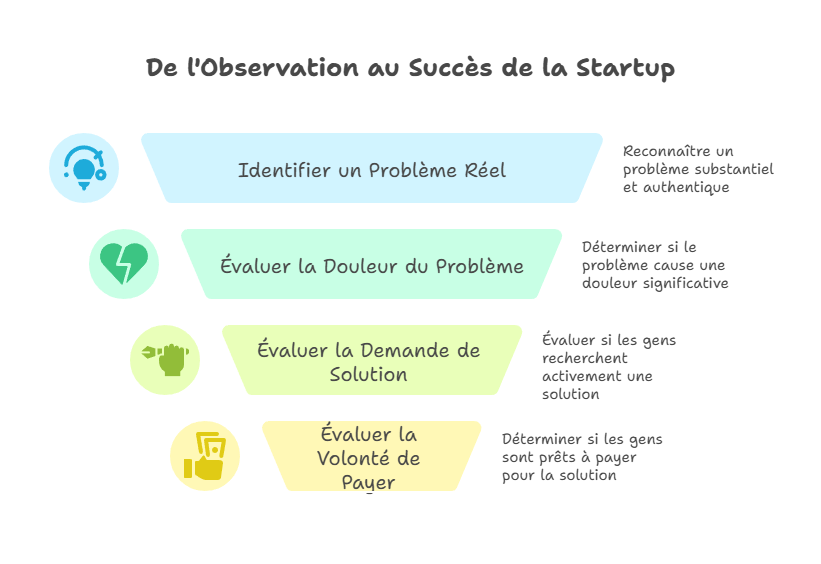
To find a startup idea that is viable, you need to identify a real and substantial problem. Investors and accelerators like Y Combinator look for founders who tackle concrete difficulties rather than abstract concepts. When you solve a genuine problem, you create value that users are willing to pay for.
Ask yourself these questions: Does this problem cause significant pain? Are people actively looking for a solution? Would they be willing to pay to solve it? If you answer "yes" to these questions, you are on the right track.
The difference between a cool idea and a useful idea
Do not confuse an idea that looks impressive with one that solves a need. A "cool" idea grabs attention for a moment but may lack practical use. A useful idea, on the other hand, even if it seems mundane at first, creates lasting value.
For example, a social network for pets might seem original (a cool idea), while a service that helps owners quickly find available veterinarians answers a concrete need (a useful idea).
Examples of startups born from a personal need
Many successful startups began because their founders were trying to solve their own problems:
- Airbnb: The founders needed money and came up with the idea of renting out air mattresses in their apartment
- Dropbox: Drew Houston was tired of forgetting his USB key
- Slack: Originally created as an internal communication tool for a team developing a video game
These examples show that how to find a business idea often comes from a personal frustration that you decide to turn into an opportunity.
How to spot a startup idea around you
Good startup ideas are often hiding right under our eyes. To spot them, develop your sense of observation and stay alert to everyday opportunities.
Identifying friction in everyday life
Keep your eyes open everywhere, at home, at work, at school, or in your neighborhood, and note down what makes your life complicated. Everyday frustrations are gold mines for finding a startup idea. By trying to make your daily life simpler, you might discover your next business opportunity.
Building for yourself and your friends
Ask the people around you about their unmet needs. Which products or services would be useful to them but that they cannot find today? A brainstorming session with the people close to you can generate valuable ideas. What is more, starting a company with friends allows for smoother and more transparent communication, which makes it easier to build a product that truly fits its users.
Observing unmet behaviors
Carefully observing customer behavior reveals hidden opportunities. Analyze how people interact with existing products in order to identify the painful points of their experience. This method makes it possible to uncover not only problems linked to the current process, but also other opportunities for innovation. In this way, you can understand the triggers, motivations, and obstacles that shape purchase decisions.
Paul Graham's principles for finding an idea
Paul Graham, co-founder of Y Combinator, offers a pragmatic approach to finding a startup idea that actually works.
Observing recurring problems in your own life
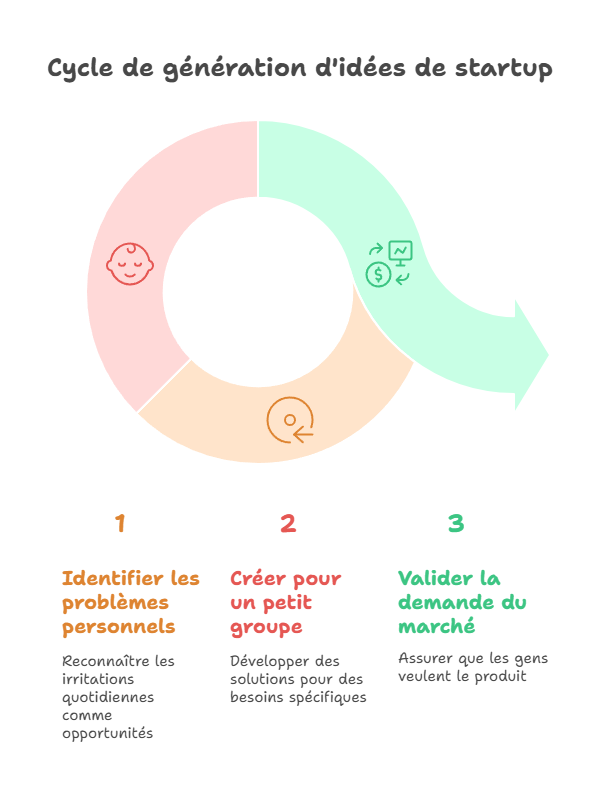
According to Graham, the best way to generate ideas is not to try to invent them, but to identify problems, especially those that you encounter personally. When something irritates you on a daily basis, it could be an opportunity for innovation. Working on a problem that you experience yourself guarantees that the problem really exists. The most promising ideas often seem obvious, at least to their creator.
Building for a small group of people
Graham advises developing a solution that few people want intensely, rather than a product that many people want only mildly. At launch, you need users who have an urgent need for what you are offering. This initial group is usually small but passionate. For example, Airbnb started by solving a specific problem: hosting people attending a conference when hotels were fully booked.
Doing something people genuinely want
In the end, what matters most is offering "what people want." Ask yourself this crucial question: who wants this right now? Who wants it so much that they will use even an imperfect version built by an unknown startup? Without users ready to pay, you do not have a viable business. As a matter of fact, the main reason startups fail is the absence of a real market.
Peter Thiel's strategies for thinking differently
Peter Thiel, co-founder of PayPal, offers a radically different approach to finding a startup idea that genuinely changes the game.
Looking for a secret that others do not see
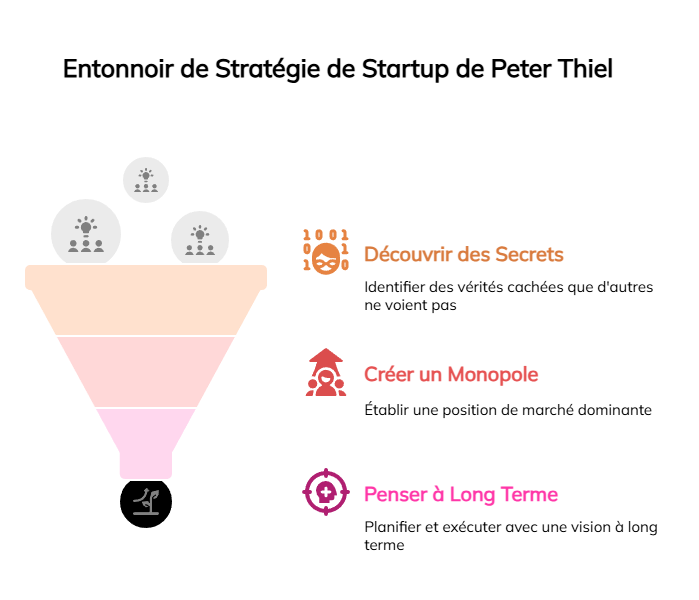
According to Thiel, the best opportunities lie in "secrets," those truths that few people perceive. He distinguishes between two kinds of secrets: secrets about nature (undiscovered aspects of the physical world) and secrets about people (things people are unaware of or hide). To uncover these hidden opportunities, ask yourself this fundamental question: "What important truth do very few people agree with you on?" This kind of reflection will guide you toward transformative innovations that others overlook.
Creating a monopoly rather than competing
Contrary to common wisdom, Thiel argues that "competition is for losers." In the long run, in a perfectly competitive market, no company makes any meaningful economic profit. The solution? Build a monopoly, not in the negative sense, but as a company so strong that no other can compete. A monopoly has the financial freedom to innovate and think beyond immediate profit, while companies locked in fierce competition are fighting for survival on thin margins.
Thinking long term from the start
Rather than chasing quick wins, Thiel recommends projecting yourself a decade ahead. "I give myself ten years to make my company succeed. I plan my strategy over 5 or 6 years. I aim to lock in a funding plan for 3 years." This extended view makes it possible to build something solid and adaptable. The goal is not to be the first on a market, but rather to be the one that brings the last decisive innovation to a sector, the one that will generate lasting profits.
How to turn an idea into a concrete opportunity
Having a brilliant idea is not enough; you must turn it into a viable business opportunity. The journey from the initial idea to a sellable product requires rigor and method.
Validating a startup idea with an MVP
To validate a startup idea, start by building a Minimum Viable Product (MVP). This simplified prototype contains only the essential features that allow you to test your concept with real users. Favor speed of execution over perfection; a rough MVP often makes it possible to collect valuable feedback without major investment.
Testing with a small market
Start by targeting a precise segment. Present your solution to this limited group and carefully analyze their reactions. This approach helps you refine your product before extending it to a broader market. Early users provide priceless insights into the strengths and weaknesses of your concept.
Thinking about distribution from day one
Distribution is not something to think about later. From the design stage, ask yourself: how will you reach your customers? Which channels will you use? Even the most innovative product fails without an effective distribution strategy. In addition, consider how your solution can spread naturally through word of mouth.
Aligning the idea with your skills (founder-market fit)
Finally, make sure your project matches your skills and passions. This "founder-market fit" is crucial; you will devote years of your life to this project. Your personal experience in the field is often a decisive competitive advantage when it comes to deeply understanding your users' needs and persevering through obstacles.
In the end, finding a startup idea is not about a sudden flash of genius but about methodical observation and structured thinking. Whether you follow Paul Graham's down-to-earth approach by solving personal problems, or Peter Thiel's disruptive vision in search of hidden truths, the process requires patience and perseverance.
Remember that most founders of successful companies did not start with a grand vision. They identified a specific need, built a simple solution, and then improved it gradually based on user feedback. So do not paralyze yourself looking for the perfect idea.
Rather than waiting for inspiration, start by actively observing the daily frictions around you. Note them down systematically. Then analyze which of them represent viable opportunities given your skills and passions.
Also, do not hesitate to start a business without a revolutionary idea at the beginning. Many startups pivoted significantly after their first contact with the market. The key is to start, test, and learn.
In the end, your best chance of success lies in striking a balance between solving a real problem that you deeply understand and creating something that people genuinely want to use and are willing to pay for. Now it is your turn!
Key Takeaways
Discover the proven strategies of Paul Graham and Peter Thiel for turning your everyday observations into viable business opportunities.
• Solve your own problems: the best startups grow out of personal frustrations that you turn into concrete solutions
• Build for a small, passionate group rather than an indifferent mass: a few users who love your product beat many who only like it
• Look for the "secrets" that no one else sees: identify important truths that few people agree with you on
• Validate quickly with an MVP: test your concept with real users before investing heavily
• Think about distribution from the start: even the most innovative product fails without a strategy for reaching its customers
Methodical observation of everyday frictions and quick on-the-ground validation are worth more than searching for the perfect idea. Start by systematically noting down what irritates you, then turn those irritations into opportunities for innovation.
FAQs
Q1. How do you identify a good startup idea? A good startup idea solves a real and urgent problem that people are actively trying to solve. It must create value that users are willing to pay for, rather than simply being a "cool" idea without practical use.
Q2. What is Paul Graham's method for finding a startup idea? Paul Graham recommends observing recurring problems in your daily life, building a solution for a small group of people who really need it, and making sure you are doing something that people genuinely want to use.
Q3. How does Peter Thiel advise thinking differently to find a startup idea? Peter Thiel suggests looking for a "secret" that others do not see, building a monopoly rather than entering into direct competition, and thinking long term from the very beginning of the project.
Q4. How do you validate a startup idea? To validate a startup idea, it is recommended to build a Minimum Viable Product (MVP), test it with a small targeted market, and carefully analyze user feedback to refine the concept before scaling it.
Q5. Why is it important to align the startup idea with your personal skills? Aligning the idea with the founder's skills (founder-market fit) is crucial because it allows for a deep understanding of users' needs and provides the motivation needed to persevere in the face of obstacles. In addition, personal experience in the field can be a significant competitive advantage.